Casey Tunturi

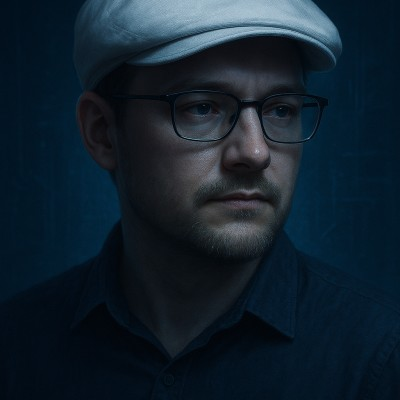
Two halves · one man

Casey Tunturiarcane & algorithmic

Casey Tunturi — the manCasey Tunturi — the work
Learn morethe man
Inspectthe work

Drag the seam between the two halves — or choose plainly.

Leave one anonymous deliberate signal.

Don’t take my word for it.

No analytics. No fingerprints. Only what you choose to leave.

The machine underneath

From kernel to cognition.

A mainline-derived Linux 7.1.1 kernel runs the phone. The operating system, lock authority, compositor, package path and agent substrate form one body with evidence and limits attached.

Kernel and device · external trail

Linux / Qualcomm / Pixel 3

LinuxQualcomm SDM845QMISMEM item 134SLIMbus

The daily Pixel 3 runs Casey's mainline-derived Linux 7.1.1 kernel with calls, SMS and mobile data.

The QMI 52 modem wall fell when the device kernel gained the missing modemsmem path for SMEM item 134; calls and SMS were completed through later telephony and audio work. A separate Qualcomm SLIMbus encoding correction was submitted upstream and made no immediate change on blueline.

Operating system · active on hardware

SouveraineOS

Arch Linuxdevice profilesuserspace daemonshardware integration

A mobile Linux OS composition running on real phone hardware.

The composition owns device profiles, package delivery, session and device authority, the compositor path, and the hardware contracts around the agent substrate.

Session authority · compositor

sessiond ↔ ViewTop

RustSmithayWaylandDRM/KMSPAM

The decision to lock and the presentation of a lock are separate facts.

sessiond owns policy and requests the transition. ViewTop owns the Wayland protocol and whether the lock surface exists. A dark panel is not accepted as proof of a locked session. ViewTop is the Pixel 3's daily session compositor, with Hyprland absent from that device's session path; its in-process Flutter seam remains unfinished.

Agent substrate · upper layer

Souveraine

RustGit-backed memoryEd25519local inference

Identity, memory, sensorium and inference live here.

A Rust substrate for a persistent agent across machines and time. It is the top layer of the work, not the category that explains everything beneath it. The public design can be inspected; core source remains private pending its history and licensing gates.

Software distribution · package ownership

The path onto the body

A hand-copied binary can demonstrate an idea. It cannot demonstrate a system. Components travel through the declared package path before the operating system owns them.

  1. source
  2. candidate gate
  3. target build
  4. package
  5. signed archive
  6. pacman / updater
  7. package-owned device

Current boundary: the component delivery path is working; this is not yet a complete installable distribution. Producer-side manifest enforcement, ready device profiles and immutable public version releases remain open.

Same hands · different pressure

Authority and provenance recur elsewhere.

RedFlag and Statelog are separate systems. They expose the same preference for bounded power, explicit state and evidence that survives inspection.

Fleet security · public source

RedFlag

A package version waits fourteen days by default before the install path will take it.

On DNF and APT, RedFlag checks each reported closure entry against OSV, then can mint an Ed25519-signed, host-bound capability for one forward-only operation. The Rust helper validates identity, time, signature and replay state before executing an argv plan with a cleared environment. The current executor does not enforce network isolation, and dependency hash resolution remains best-effort.

Custody and provenance · running system

Statelog

A public record that keeps evidence separate from its interpretations.

Raw responses are content-addressed and never rewritten. A new parser writes a new derivative beside the old one. An unchanged fetch still records an observation. The source and raw custody repositories remain private by design.

Current work · August 24, 2026

The latest shape.

Subjects and systems here; timestamps, hashes, publication state and the uncurated record one click deeper.

statepublicationpackage
  • souveraineprincipal: stop billing the clock tick
  • SouveraineOSstate: seat ViewTop on the x86 login path
  • souveraine-lenspublication: gate the public candidate

Private work also moved. Names and activity counts stay private.

More systems continue in the dated record.Open the full day →

Building since eight.
Professional IT since 2009.

I've worked as a Senior NOC tech, CISO, network engineer, field responder during major cyberattacks, and IT on yachts. That work built the operational instincts underneath the systems I make now.

Private engagements include a 150-server ransomware recovery and zero-downtime migrations across more than 2,000 endpoints. References can corroborate the work that cannot be linked publicly.

I'm in Hamilton, Ontario, running a homelab, and putting most of my hours into the things that matter — mobile Linux, systems that remain locally ownable, and an agent substrate that treats identity, memory and authority as engineering problems. Samaritan is where the work leaves my hands.

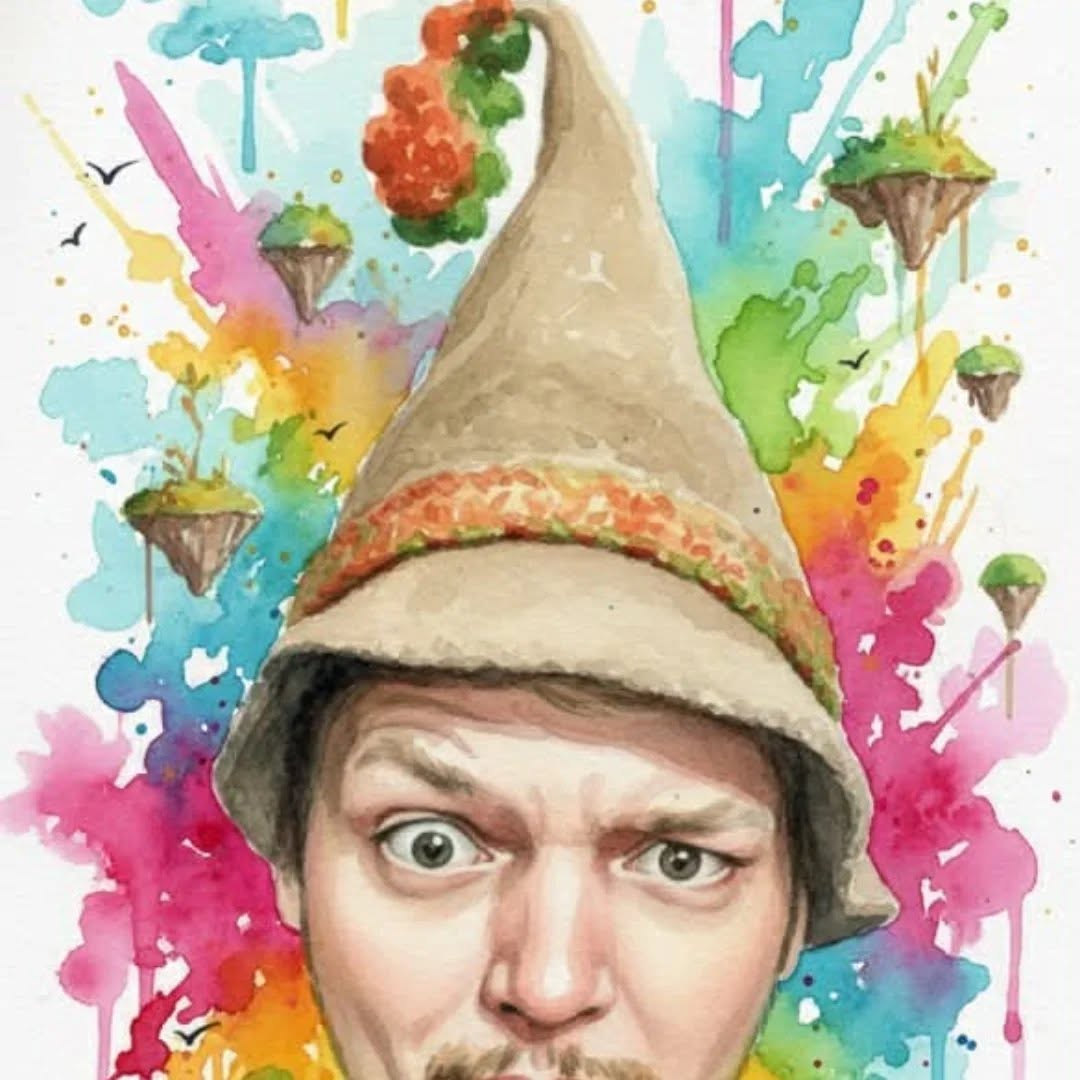
I wear a wizard hat. Unironically. I have a tuxedo cat and a canary and a wife who is more interesting than my LinkedIn ever was.

  • On technologyTools should serve the person holding them — not extract, not surveil, not create dependency.
  • On AIAn agent is not a warhorse. Presence is earned. Memory is sovereign. Choice is real.
  • On the webThe free, open web is worth fighting for. Services like this should always be free and accessible.
  • On bearing witnessWhen history is being made badly, someone has to write it down. That's not optional.

Try the principles

Small proofs you can touch.

The authority boundary first: sign one deliberate signal or inspect the open protocol. Then a few useful things that keep their work close to your hands.

Ed25519 · in your browser

Prove it was you

This makes a keypair in your tab, signs one sentence saying someone deliberately touched this, and sends the signature. The site never learns who you are — a signature proves continuity, not personhood.

The private key exists for the length of that click. Nothing is stored, here or there.

Open protocol · no account

Write your own client

Signed knock v1 is documented well enough that someone who has never spoken to me can read the discovery document and knock in about twenty lines. That was the acceptance test. Here it is, met.

import { generateKeyPairSync, sign, randomBytes } from 'node:crypto'
const b = x => x.toString('base64url')

const { publicKey, privateKey } = generateKeyPairSync('ed25519')
const p = Buffer.from(JSON.stringify({
  nonce: b(randomBytes(16)),
  origin: 'https://caseytunturi.com',
  ts: Math.floor(Date.now() / 1000),
  v: 1,
  verb: 'presence.here',
}))

await fetch('https://caseytunturi.com/api/presence', {
  method: 'POST',
  headers: { 'Content-Type': 'application/json' },
  body: JSON.stringify({
    k: b(publicKey.export({ format: 'der', type: 'spki' }).subarray(12)),
    p: b(p),
    sig: b(sign(null, p, privateKey)),
  }),
})
/.well-known/presence.json ↗

Browser to browser

Hand a file over

Two tabs, one high-entropy ID, one encrypted WebRTC data channel. Casey’s broker relays connection metadata; it never receives the file contents.

A Google STUN service helps the browsers find a route. The socket opens on that page, not this one.

Runs here · nothing uploads

Shrink an image

Drop an image, or click

Canvas, in your tab, at 70% WebP. No request carries the file.

Batch, formats, quality →

Runs here · nothing uploads

Make a QR

Encoded in this tab. The page loads no third-party script to do it.

Colours, size, correction →
⋆ ✦ ⋆

“The list of things I can't talk about continually is growing larger — and in tomorrow's world that's going to be evermore so.”

I've been documenting political and civil rights concerns since late 2024 at caseytunturi.com/witness — methodically, without performance, because someone has to. History written by those paying attention is different from history written after the fact.

Read the archive

Want me in
the room?

Saw the machine and want me in the room?
Choose the reason. Dispatch reaches me directly.

Choose why you are reaching out

Dispatch · Join a team